Fruuuuuutah
2024
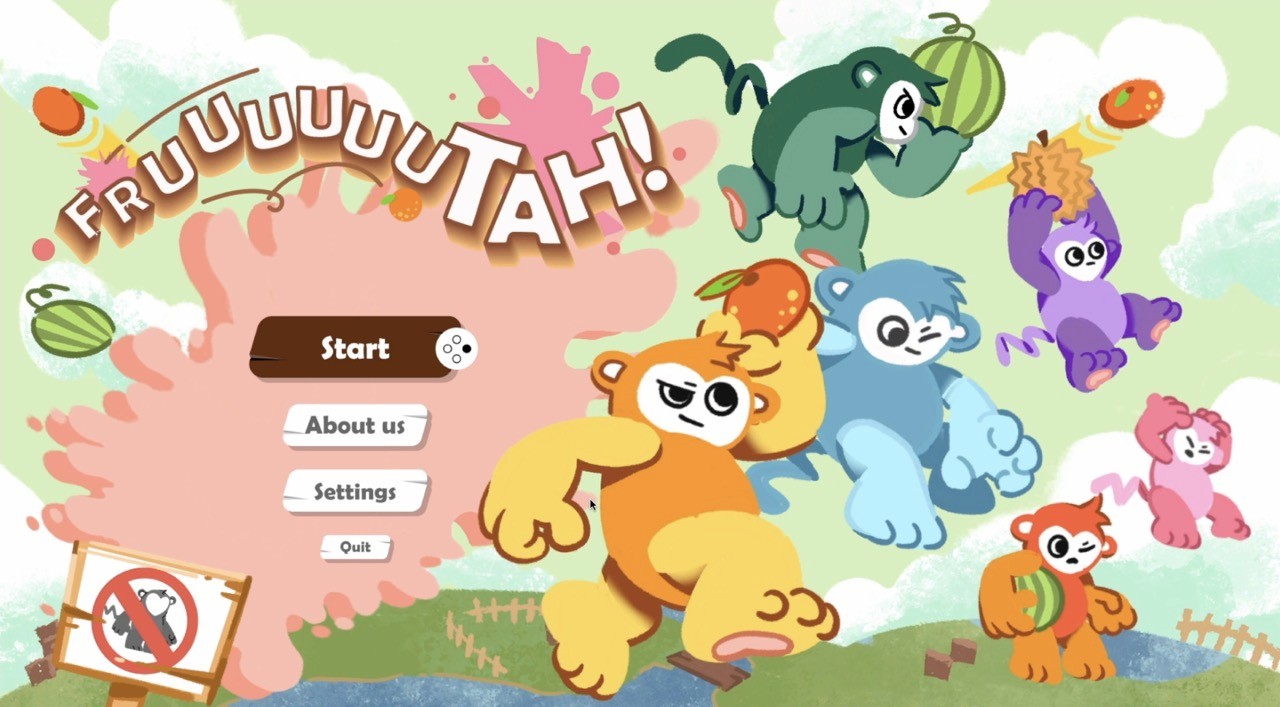
A fast-paced couch-party game where monkeys throw fruit, knock opponents down, and capture flags to control territory in 3-minute matches. Fruuuuuutah is a local multiplayer RPG-style battle game designed as a short, intense party experience for 2–6 players.
Team
Not Yet –
Paxton (Design & Programming)
Susy (Character Animation & UI)
Cai (Environment Art & Scene Design)
Yining (Character Illustration)
Problem & Goals
We didn't just want "another fighting game" – we wanted a sofa party game that feels: • Easy to pick up in under a minute • Chaotic and funny enough to keep people shouting and laughing • Short enough that players immediately say, "One more round?"
Target players
• Friends playing together in the same room • Many are not hardcore gamers and may be unfamiliar with controllers
Design goals
• Fast onboarding: New players understand the core objective within 30–60 seconds • Short, high-energy matches: Default match length 3 minutes – enough for drama, short enough for replay • High social interaction: Game moments that naturally create shouting, cheering, and teasing • Clear objective: "Hit with fruit → knock down → stand on flags → capture territory → most territory wins." • Production constraint: First playable version delivered in 8 weeks
Research & Player Insights
Competitive & reference study
As a team, we analysed games like Overcooked, Fall Guys, Super Animal Royale, Boomerang Fu and evaluated: • How they teach rules quickly • How they handle screen chaos with clear information • What makes players say "I want to play again" We rated them on: • Rule complexity • Ease of understanding the win condition • Desire to replay This helped us define Fruuuuuutah's direction: simple rules, skill-expressive gameplay, high replayability.
Early conversations
From informal discussions with potential players, a few key insights emerged: • Players don't want long tutorials; they prefer to learn while playing. • They value games where skill matters more than luck, so practice feels rewarding. These shaped our decisions around minimal text tutorials and power-ups that enhance skill, not random chaos.
Playtesting
We ran multiple rounds of tests: • Week 6 – First external test: ~8 external players • Week 8 – Final presentation: ~50 players • Public exhibition: ~250 players total
Key observations: • Rules were surprisingly easy to understand even before we had a proper instruction screen. • The main initial friction was: • Controller familiarity (players new to Xbox / PS / Switch-style controllers) • Losing track of their own character in busy scenes These directly informed later iterations.
Designing the Core Mechanics
From "just fighting" to territory control
Early prototypes were mostly about throwing fruit and knocking others down. Through ideation and feedback, we added: • Flags and territory control as the core objective • Standing on a flag for a few seconds captures that area • The ground visually shows which team controls each territory • At match end, territory coverage decides the winner This shifted the game from "pure chaos" to chaos with a clear strategic goal.
Why 3-minute matches?
We tested different durations and chose 3 minutes because it: • Feels tense and urgent • Gives time for exploration, combat, and comeback moments • Prevents losing players from feeling stuck in a hopeless long match • Encourages repeated play: it's easy to say "Let's run it back"
Player count and technical constraints
Our ambition was 4–8 players, but: • Too many controllers connected to one machine caused input and performance issues • We settled on up to 6 players as the sweet spot between: • High energy • Acceptable performance and responsiveness This is where design ambition met technical reality.
Power-ups: narrowing to the essentials
We brainstormed many fruit-themed power-ups, but pared them down to a clean, readable set, such as: • Speed boosts • Health refills • Weapon reloads • Shields Reason: players only have one short session to understand what's happening. The final set keeps the game easy to learn yet rewarding to master.
UX & Interaction Design
Onboarding with minimal text
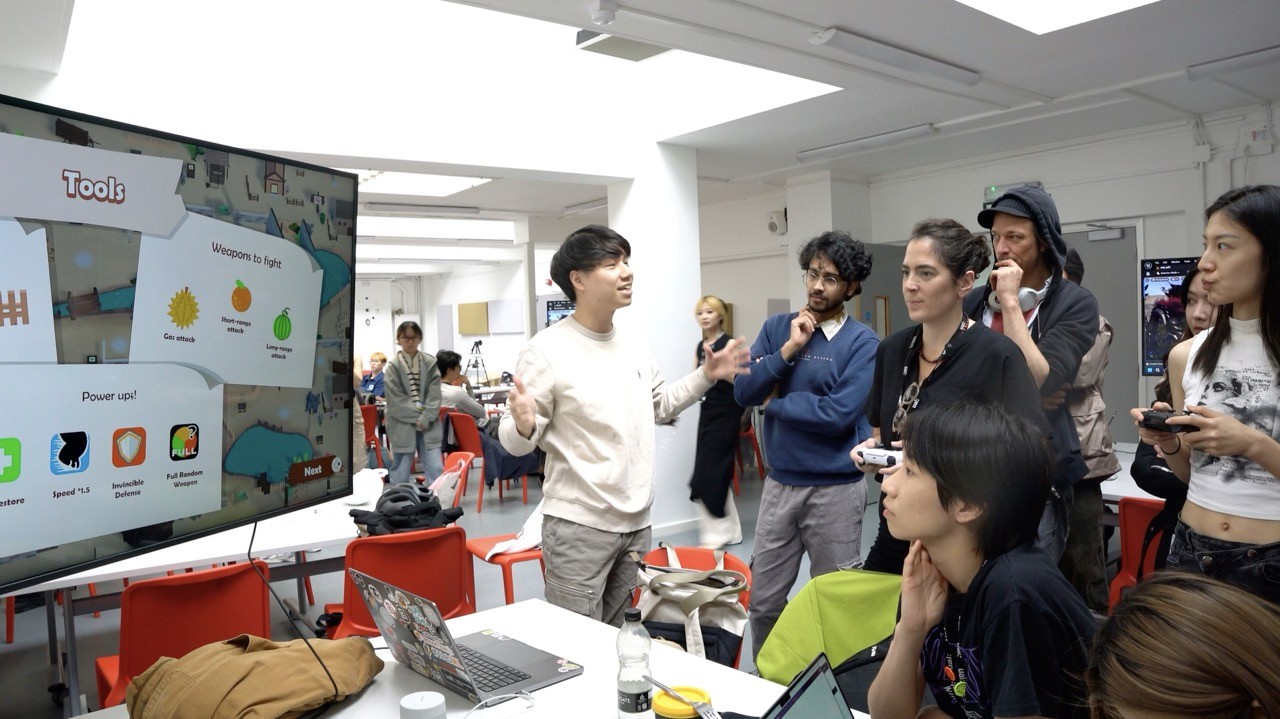
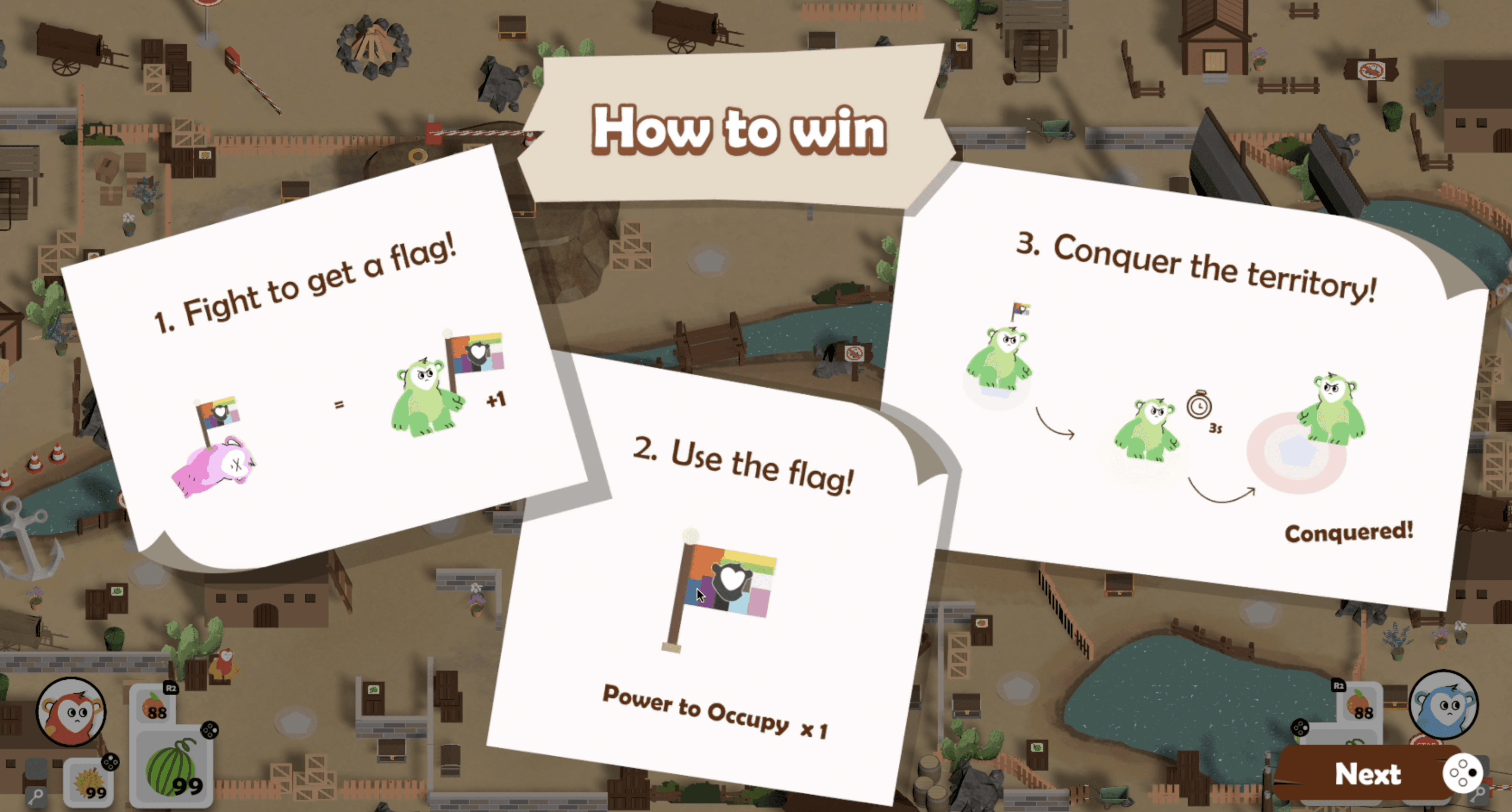
When designing the tutorial, our principle was "show, not tell": • Used illustrations and icons instead of paragraphs of text • Explained: Movement, Throwing fruit, Capturing flags, Power-up basics • Kept wording short, so even impatient players or non-native speakers can follow
Controls & feedback
To reduce friction for players familiar with console games: • Button layout was inspired by Overcooked and Splatoon, so experienced players could rely on muscle memory. • We added multi-sensory feedback for key actions: • Fruit hits: Visual break, Impact sound, HP gauge update • Flag capture: Area lighting / glow, Subtle animation and sound, Clear confirmation when capture completes
A specific UX improvement
Players didn't know if they had stood long enough on the flag. We added light and sound signals linked to time on the flag, so they could feel the capture without reading "Stand 3 seconds".
Visual clarity: "Which monkey am I?"
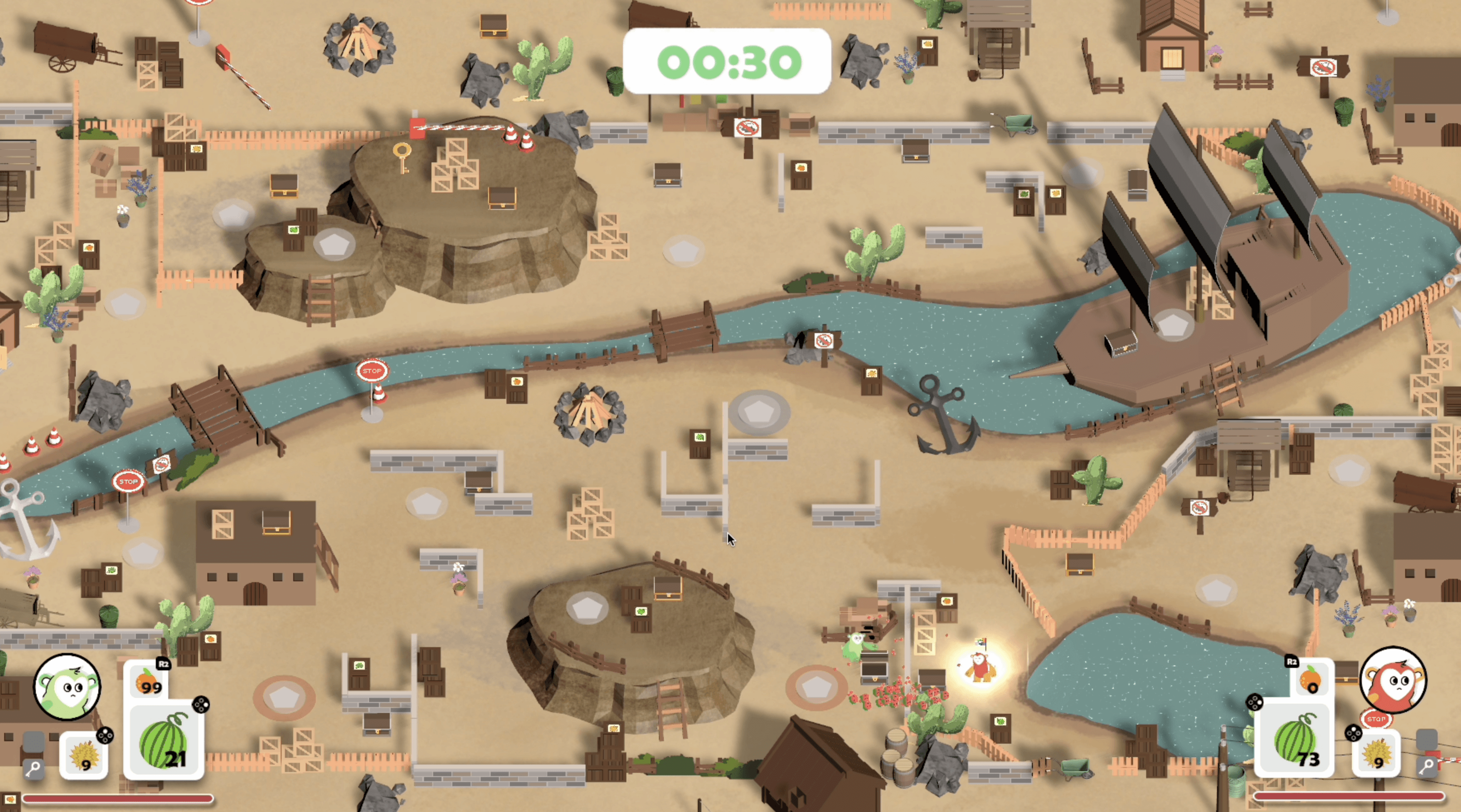
Early tests revealed a recurring problem: Players sometimes watched the wrong monkey and wondered why their input "wasn't working". To fix this, we: • Moved from only different headband colours to: • Distinct clothing / body colours • Avoiding similar hues to reduce confusion • Adding decorative items so players recognise "their" character by silhouette and accessory
Score visibility & emotional design
We debated whether to show a live scoreboard during matches. We chose not to show exact scores in-game: • Players can still estimate standings by visually scanning territories • Uncertainty keeps the tension high, especially when it looks close • Losing teams don't immediately feel hopeless, which encourages them to keep pushing until the end This was a deliberate choice of emotional UX over full transparency.
HUD layout & screen sizes
We designed the HUD for busy multiplayer scenes: • Each player's status is fixed in one corner of the screen • HUD does not move, so players quickly learn where to look • On smaller laptop screens, some elements were initially too small • We: Resized key items, Increased contrast where needed, Designed scenes to avoid critical visual elements in HUD corners, keeping both readability and aesthetics.
Playtesting, Iteration & Outcomes
Issues identified & solutions
• Players ignored flags and only fought → Made flags and capture zones more visually prominent and rewarding. • Controller button labels confused non-gamers → Switched from text like "Press X / Y" to more icon-based, visual explanations. • Small screens reduced clarity → Adjusted UI and object sizes, refined contrast to maintain legibility. • Aiming felt difficult → Added simple direction and force visualisation, making aiming more intuitive and skill-based.
Engagement
Across tests and exhibition: • Most players played at least two matches • Some stayed for up to five rounds • During the exhibition (~250 players), we consistently observed: • Shouting, laughing, and friendly arguments • Teams discussing tactics and immediately asking for rematches For a party game, this matched our original goals very closely.
What I Learned
From Fruuuuuutah, I strengthened several skills that I now apply directly to product and UX design: • Planning & sequencing work under time pressure • Breaking an 8-week schedule into milestones • Assigning tasks based on teammate strengths • Reducing "waiting time" between tasks by ordering implementation carefully • The value of external testers • Internal play feels very different from first-time user experience • Micro-issues like "Do I know I've captured this flag?" only emerge when watching new players • Designing interactions that teach themselves • Using animation, sound, and visual states to communicate rules • Removing unnecessary text once the interaction becomes self-explanatory • Balancing clarity and emotion • Sometimes not revealing everything (like exact live scores) creates better motivation and suspense Overall, Fruuuuuutah was not only a fun game to build, but also a practical sandbox for UX thinking: onboarding, information hierarchy, feedback loops, and emotional experience design — all compressed into a chaotic three-minute match.
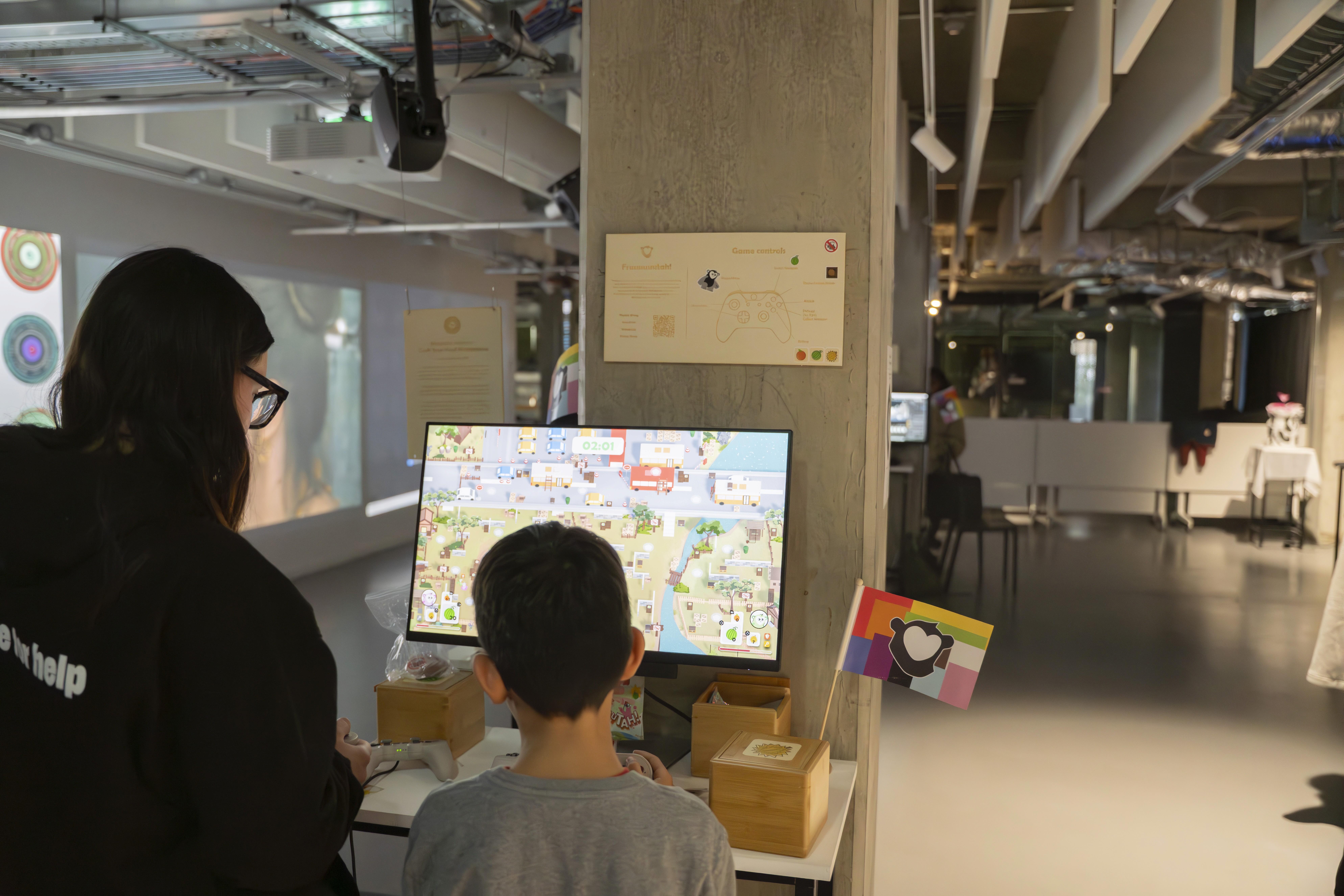
Exhibited at the CCI 2025 Winter Festival
This project was selected for showcase at the Creative Computing Institute's 2025 Winter Festival, highlighting innovative work in art, technology, and interaction.
project
Fruuuuuutah
year
2024
timeframe
8 weeks
tools
Unity
category
Game develop
roles
Game Designer, Programmer